Collisions with weight.
Vehicle, rocks, trees and animals respond to contact through rigidbody physics. Mass and impact speed affect the response and damage; hard hits can move obstacles, break tree roots or send an animal tumbling.
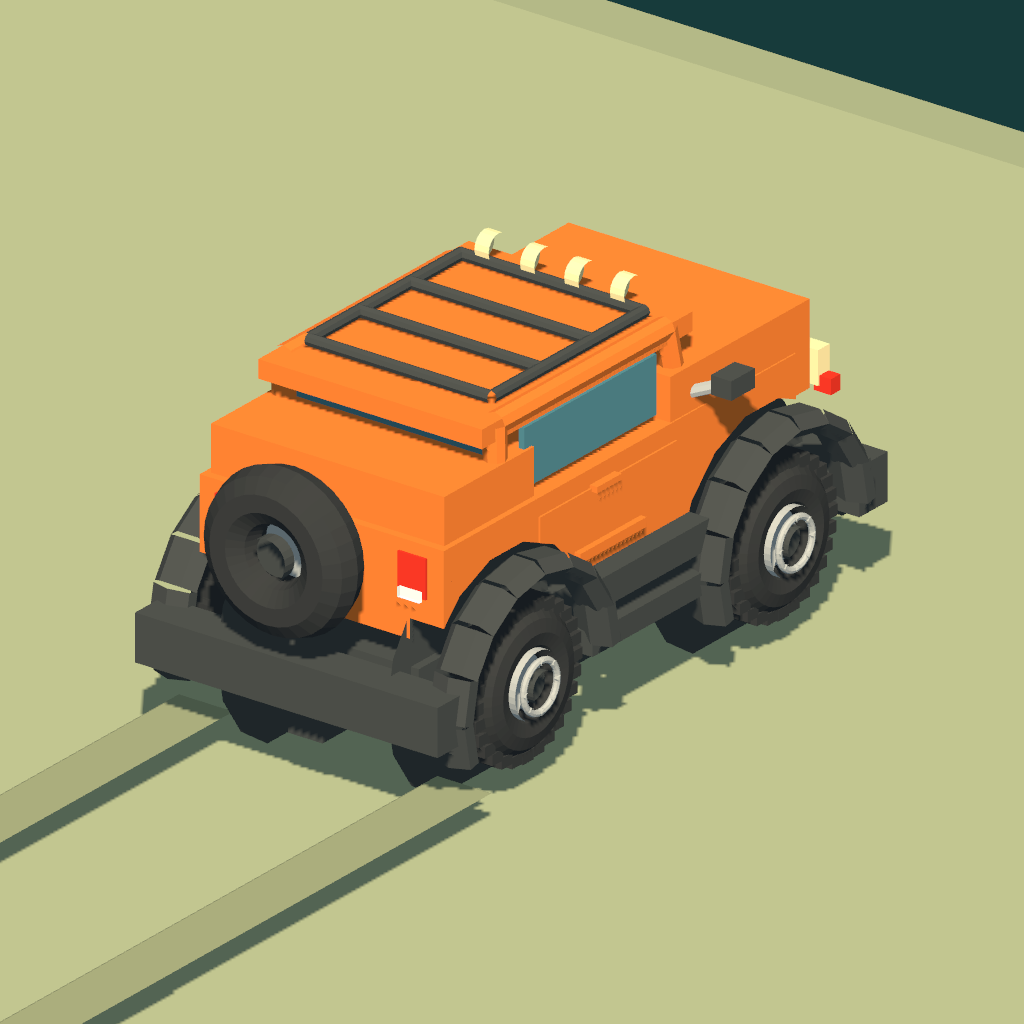
Available on the App Store · iPhone & iPad
Take the TrailRunner 4×4 beyond the road. Animals react to your approach, tires leave tracks in sand and snow, and spray rises as you cross the water. Every run opens a fresh procedural landscape.
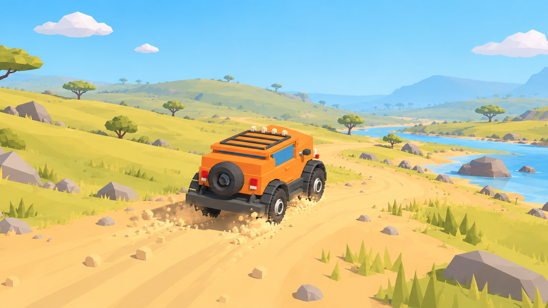
Tracks & water
Fresh Unity captures show the current vehicle, wildlife and terrain models. Animal steps and tire contact leave short-lived impressions; rivers and coastlines change the route ahead.
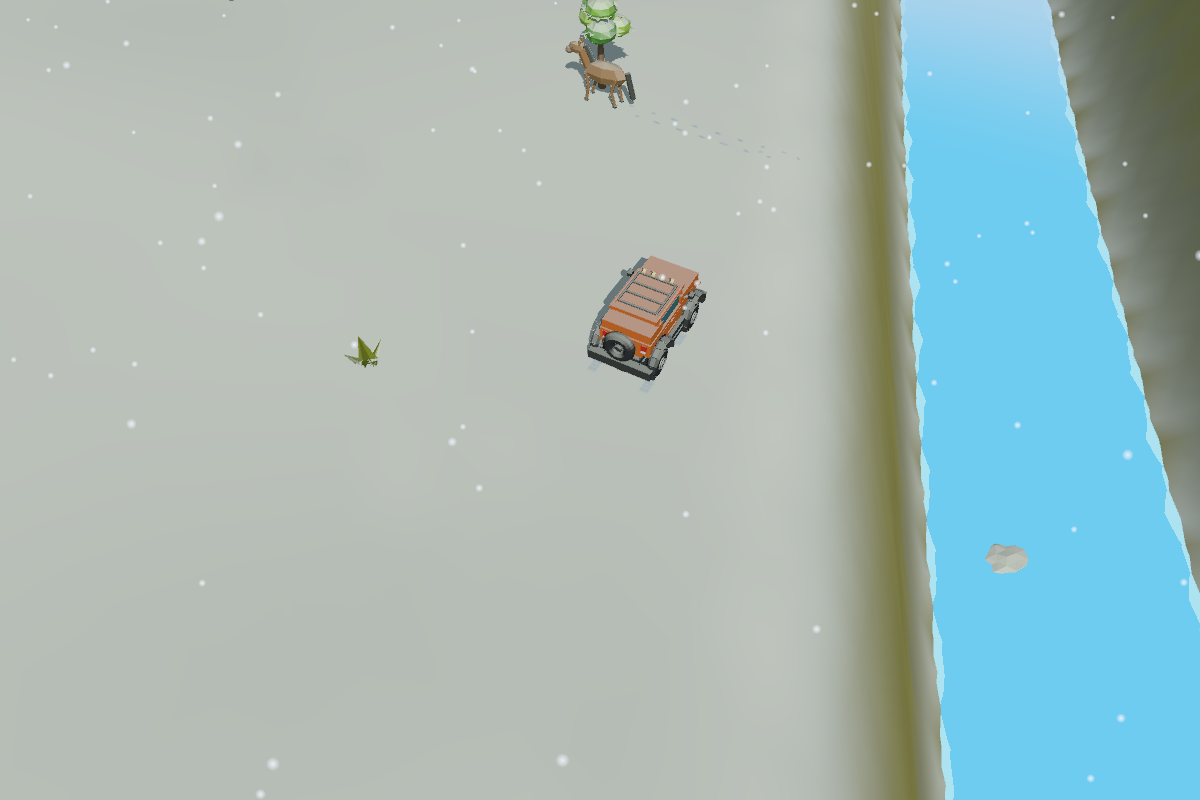
Sand and snow take species-shaped paw, hoof and bird prints. All four tires lay tread along their contact paths. Marks fade after three simulation seconds, while pausing freezes their lifetime.
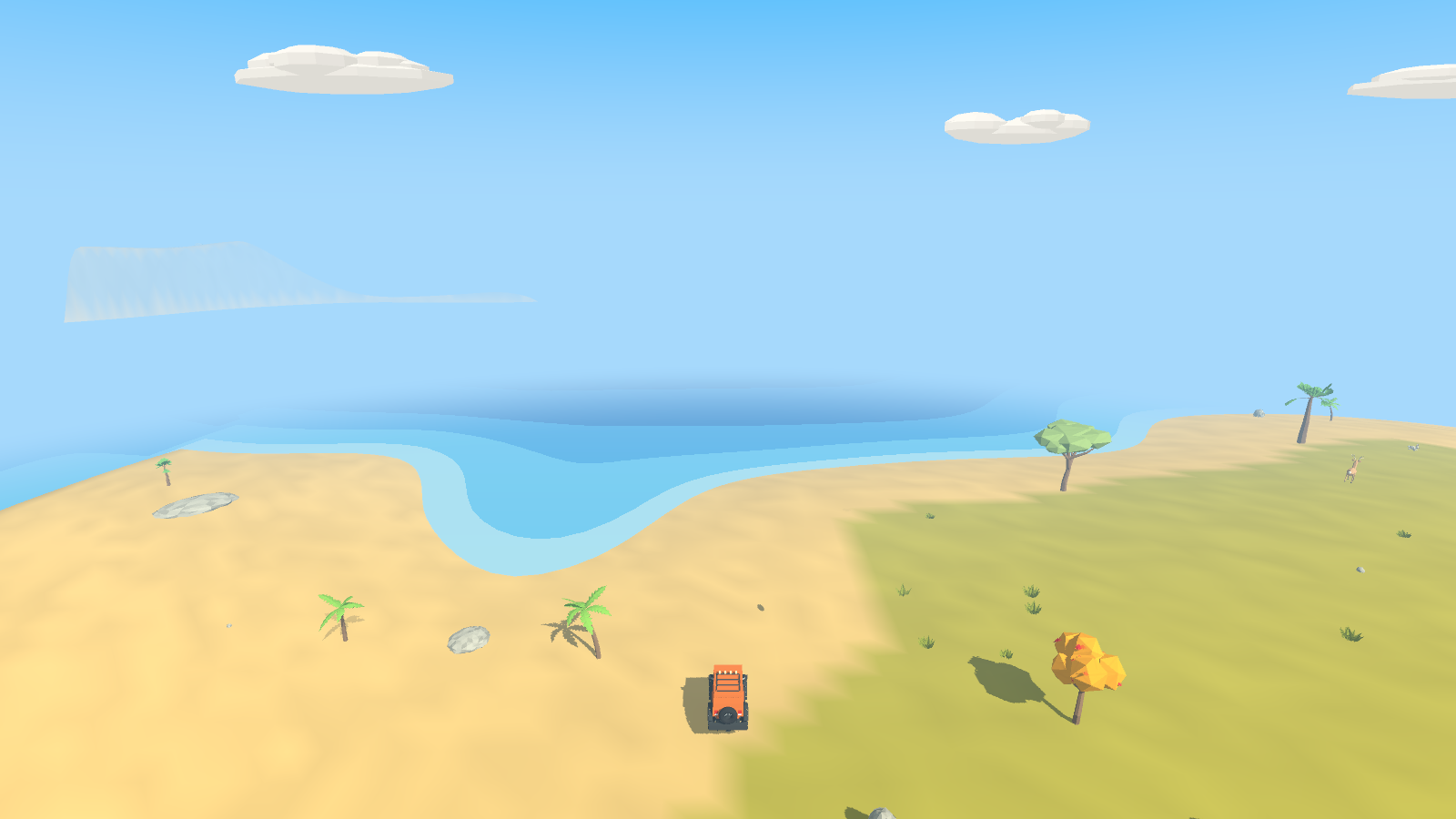
Streamed terrain meets layered shallow and deep water. Driving through the shallows creates wheel spray and a bow wake; deeper water slows the vehicle.
These are visual contact effects: the ground remains solid, and the tracks do not carve or deform the terrain.
Physics, weather & animation
A rough landing, a wet hillside or an animal crossing your path can change the run. These connected systems make exploration more than steering across a map.
Vehicle, rocks, trees and animals respond to contact through rigidbody physics. Mass and impact speed affect the response and damage; hard hits can move obstacles, break tree roots or send an animal tumbling.
Each wheel has spring-and-damper suspension, so uneven ground compresses and releases the chassis. Contact restitution controls rebound, while friction and damping help overturned vehicles and loose props come to rest.
Leave the ground and the vehicle falls under 9.81 m/s² gravity while retaining horizontal momentum. Landing damage follows the measured drop height, making cliff edges and big jumps a real risk to the journey.
Clouds drift, thicken and darken with rain and snow; fog softens the distance and brings on the headlights. Wetness and snow change tire grip gradually. An occasional eagle or V-formation of geese crosses the sky.
Each tire samples the surface beneath it. Terrain, wetness and snow adjust forward and sideways traction; swamp and water add resistance. Sliding, braking and climbing depend on where the wheels actually touch.
Six species use skinned hip-and-knee rigs with speed-driven strides. The ostrich also has an articulated torso, neck and head for walking and crouching. Gait animation yields to physical tumbling on impact.
Inside Safari Trail 4x4
These images were captured from the current Unity project in Play mode, with the updated vehicle, wildlife and environment models. Open any image for a closer look.
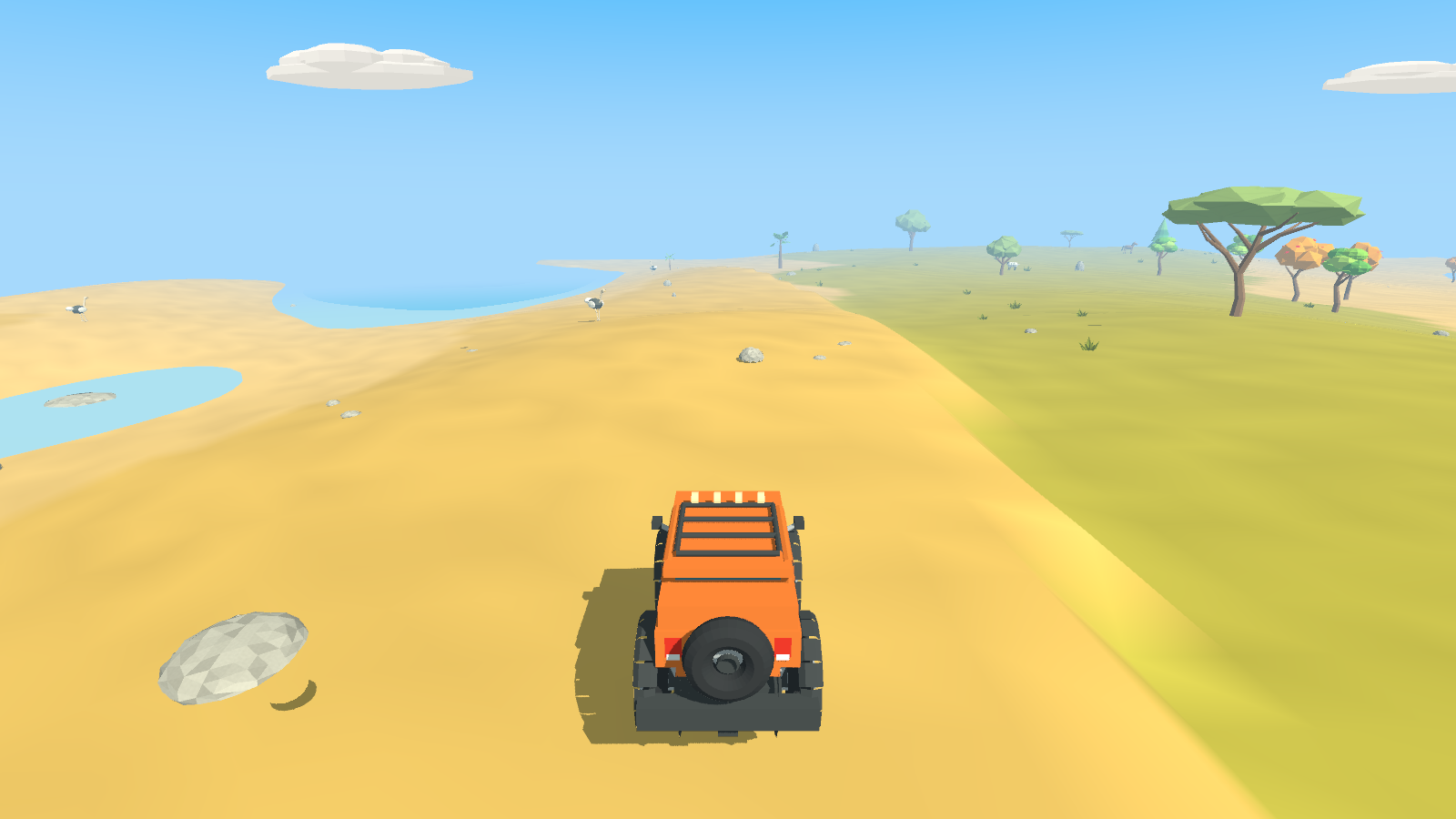
Sand, rocks and wildlife change what lies beyond the next hill.
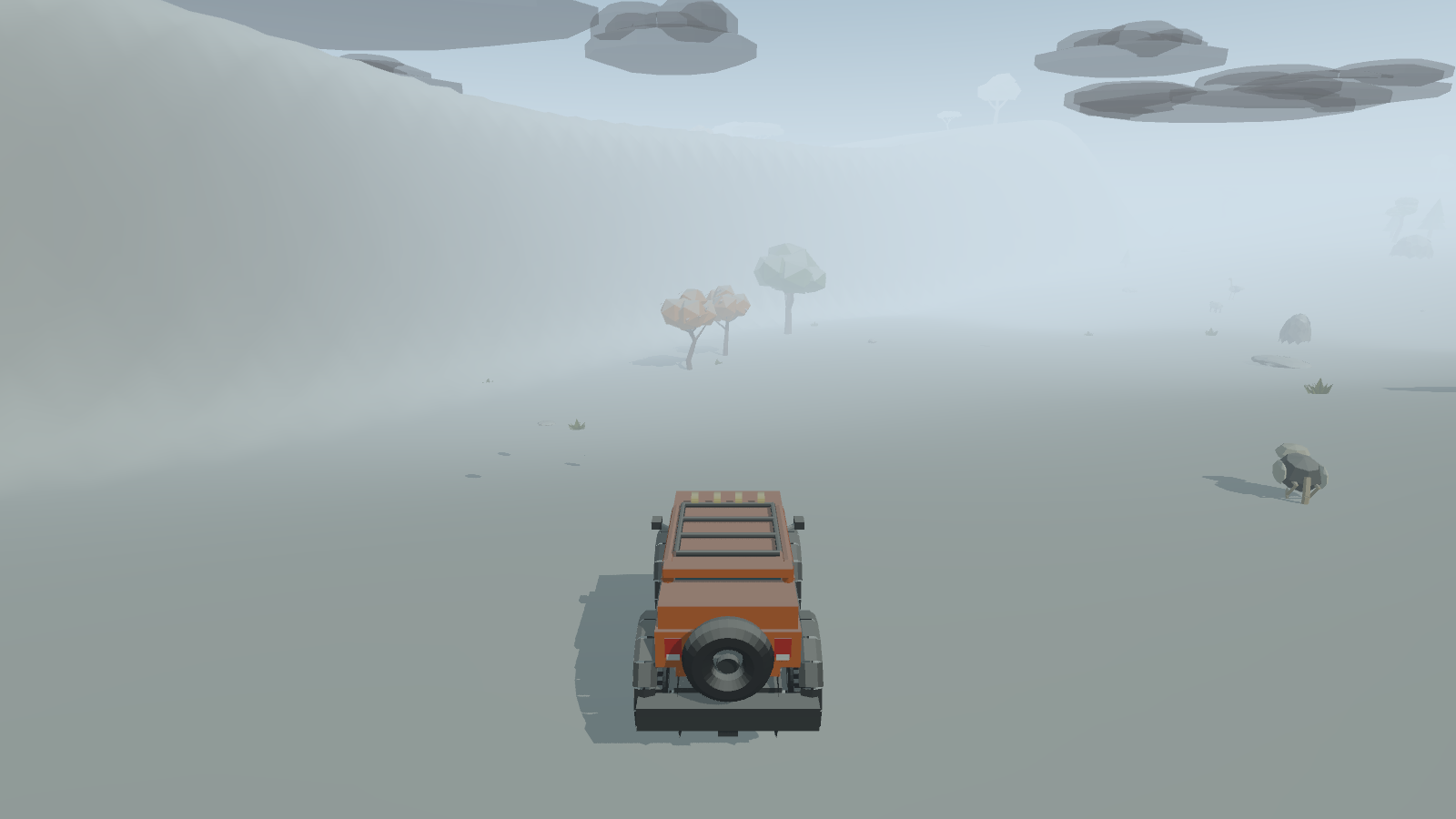
Snow and fog alter the view and the grip beneath each wheel.
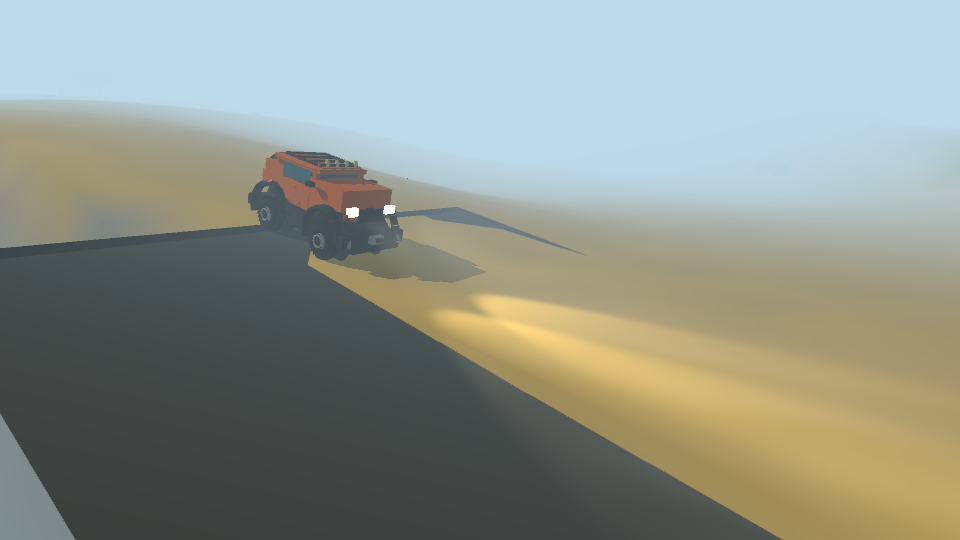
Automatic headlamps make the nearby ground visible when the fog closes in.
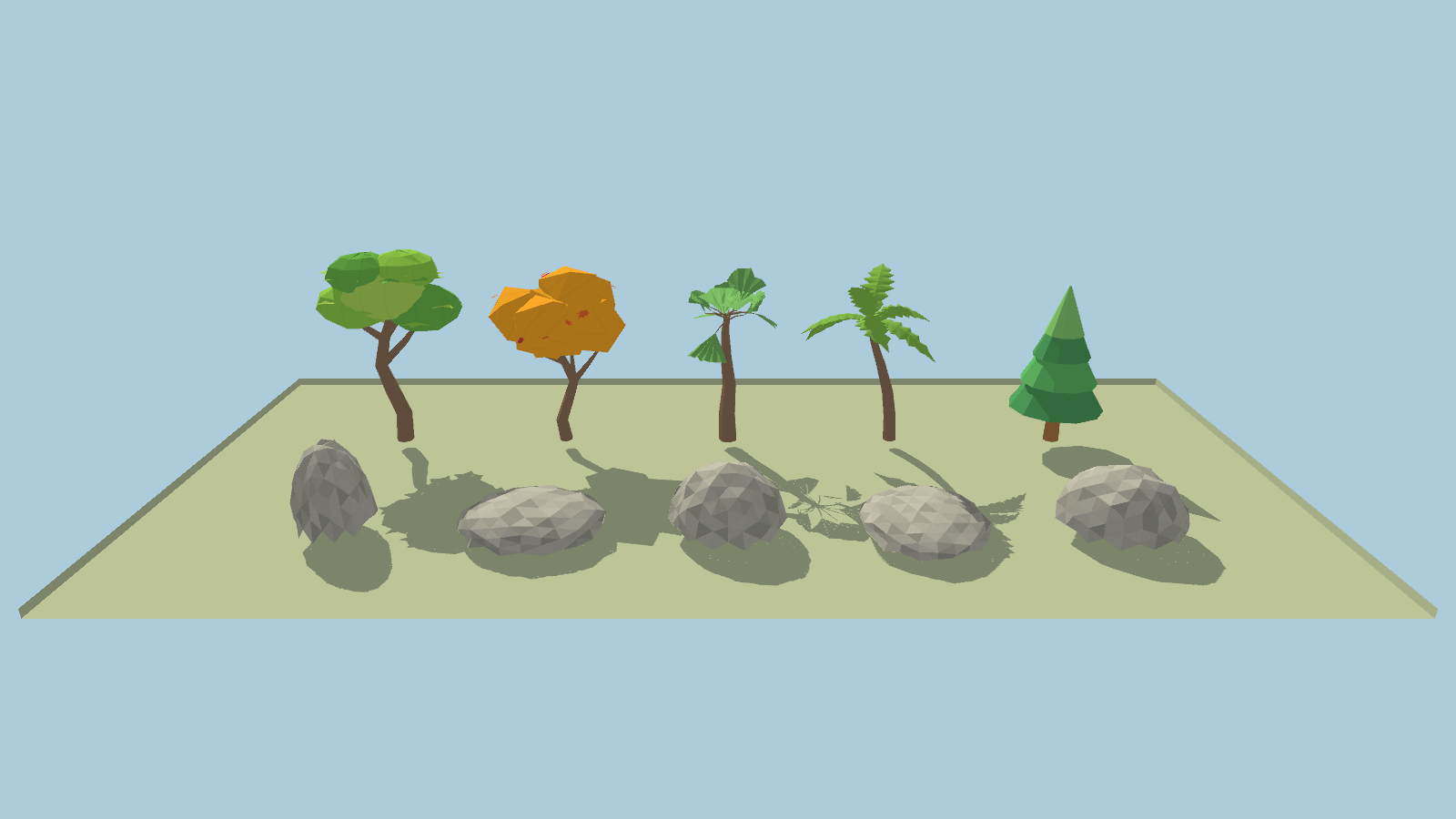
Updated tree silhouettes, foliage and rocks give each region a different shape.
Six species, different reactions
Rabbits, camels, sheep, horses, deer and ostriches wander through suitable dry terrain. Approach them or hold the horn to alert animals within 40 metres, and their species-specific behavior takes over.
These animals sprint perpendicular to the vehicle’s actual direction of travel, choosing the nearer safe side. Acceleration and faster leg motion build the escape; route checks keep them away from water, steep drops and blocked paths.
Deer aim for a predicted meeting point on the vehicle’s path, updating their target as it moves. This game behavior makes a deer encounter different from the other animals’ sideways escape.
An alarmed ostrich stops, bends its legs, lowers its torso and folds its jointed neck until its head is below the soil. Once the alarm clears, it stands up and resumes walking.
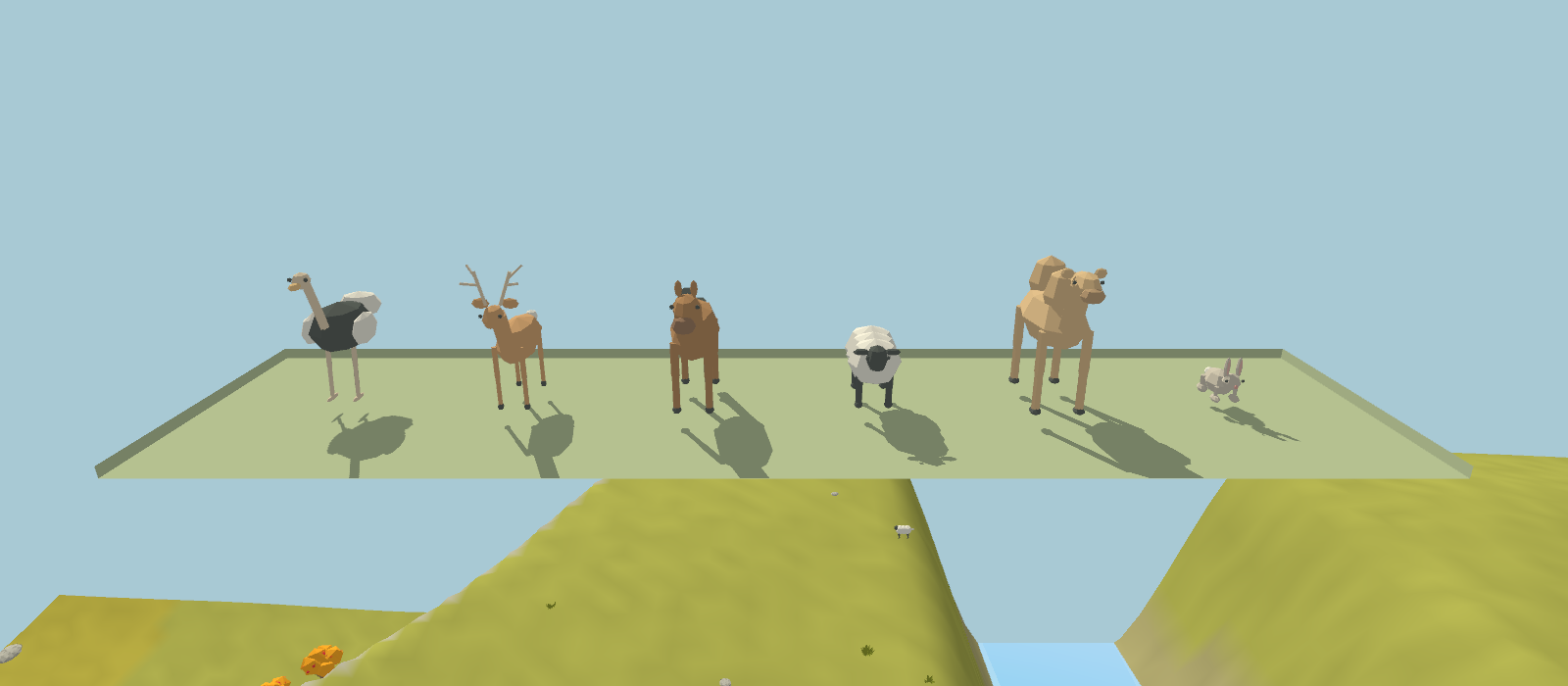
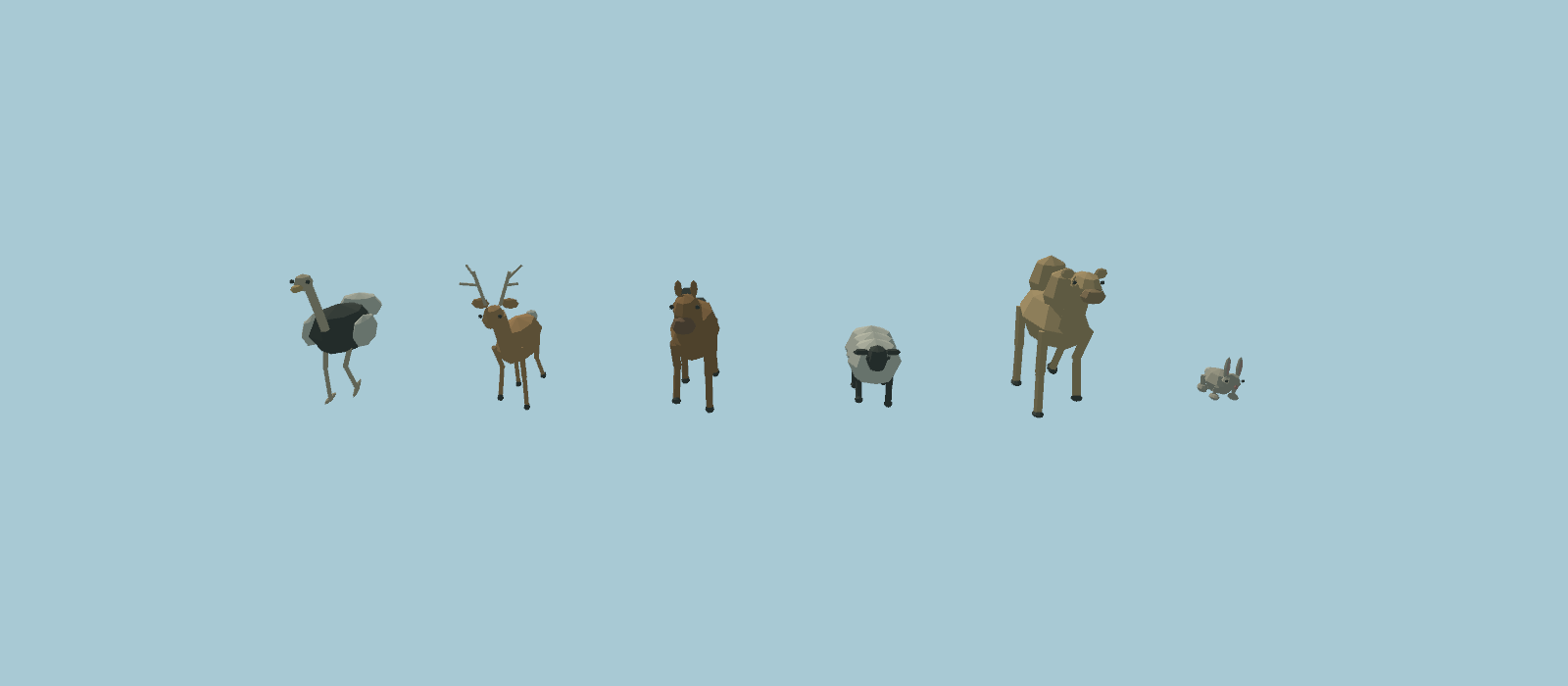
Walking follows movement. On impact, the gait pauses and the rigidbody can rebound or tumble under physical forces.

Built for exploration
Drive freely, collect coins and see how far the vehicle can go before its durability runs out.
Seeded terrain loads in chunks as you travel. Regions connect across the landscape, while a floating origin keeps long journeys close to the simulation’s coordinate center.
Four-wheel drive, independent suspension and speed-sensitive steering support offroad handling. Configured approach and departure angles protect qualifying lower-body terrain contacts from damage, while steep faces and scenery collisions still matter. Brake lights, reverse lamps and fog headlights show the vehicle’s state.
A left analog stick combines throttle and steering, with a brake pedal and hold-to-sound horn on the right. Stop and hold-drag an empty area to orbit the camera. Pause, inspect your records or replay a saved journey before heading out again.
Local journeys. Clear privacy choices.
Safari Trail 4x4 uses Google AdMob banner ads and optional rewarded ads for vehicle recovery. Review how advertising data is handled and where to find your privacy choices.
Safari Trail 4x4 for iPhone & iPad
Take the wheel in a procedural world of physical driving, reactive wildlife, transient ground tracks, water effects and recorded journeys.